


 [VIP 1 Years] Rank:2


 verified


Advanced Hydraulic Engineering Solution
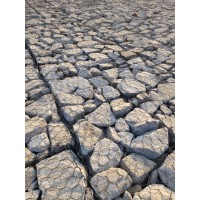
The Rapid Flood Barrier System represents a pinnacle in hydraulic engineering, specifically engineered to address the most challenging flood emergencies. Unlike traditional sandbagging methods, which are labor-intensive and slow to deploy, our system leverages the gravity stability of high-tensile steel gabion structures. These units are designed to be designed to be filled with locally available materials such as stone, rock, or even rubble, creating a massive, immovable barrier that can withstand significant hydrostatic pressure and water velocity.
One of the key engineering advantages of this system is its inherent permeability. The porous nature of the stone-filled gabions allows for the controlled seepage of water, which significantly reduces the pressure on the structure compared to solid barriers. This feature prevents the build-up of pore water pressure, which is a common cause of failure in traditional levees. Furthermore, the gravity-based stability ensures that once filled, the units stay in place even under extreme flow conditions, providing a reliable line of defense for critical infrastructure and residential areas.
Detailed Technical Matrix
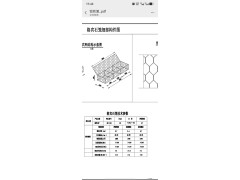
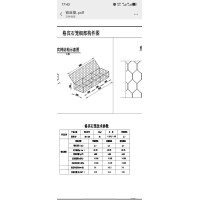
| Technical Specification | Detailed Data |
|---|---|
| Wire Gauge | 3.0mm - 5.0mm (High Tensile Strength) |
| Mesh Size | 80mm x 100mm (Standard Hydraulic Pattern) |
| Coating Type | Heavy-duty Galvanized / Galfan (Zn-5%Al-MM) |
| Coating Weight | 245g/m² - 275g/m² (As per ASTM A975) |
| Tensile Strength | 380 N/mm² - 550 N/mm² |
| Connection Type | Integrated Spiral Binders / Lacing Wire |
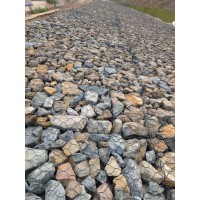
| Filling Material | Stone, Rock, Recycled Concrete (100mm-250mm size) |
Structural Interlock System
The core of the Rapid Flood Barrier System's deployment speed lies in its proprietary Structural Interlock System. Utilizing high-strength Spiral Binders (coiled wires), the units can be connected in seconds without the need for specialized tools or highly skilled labor. These spiral binders are threaded through the vertical edges of adjacent panels, creating a continuous, flexible, and robust joint.
This spiral binder technology allows for a "fast-locking" mechanism that is critical in emergency scenarios where every minute counts. The binders are designed to maintain structural integrity even under the deformation caused by the heavy weight of the filling material. Additionally, the system allows for modular expansion, meaning barriers can be built to any required height or length by stacking and interlocking additional units. The flexibility of the wire mesh also allows the barrier to conform to irregular ground surfaces, ensuring a tighter seal and better overall stability compared to rigid barrier systems.
Global Case Scenarios
Our Rapid Flood Barrier Systems have been deployed across the globe in diverse environmental conditions, proving their excellence in emergency hydraulic management. In recent riverbank restoration projects in Southeast Asia, the system was used to provide immediate reinforcement to eroding embankments, preventing further land loss during the monsoon season. The ease of filling the units with locally sourced river rocks significantly reduced transportation costs and logistics complexity.
In emergency response situations in Europe, the system has been used to create temporary dikes to protect urban centers from overflowing rivers. The rapid assembly time allowed authorities to establish miles of protective barriers in a fraction of the time required for traditional methods. Furthermore, the system is increasingly being utilized for permanent applications, such as riverbed protection and bridge abutment reinforcement, where its durability and long-term corrosion resistance (thanks to the Galfan coating) provide a cost-effective solution for decades. Whether it's for emergency flood fighting or long-term hydraulic stabilization, the Rapid Flood Barrier System remains the preferred choice for engineers worldwide.
Furthermore, the ecological impact of the Rapid Flood Barrier System is significantly lower than that of concrete-based solutions. The permeable nature of the gabions encourages the growth of natural vegetation over time, as sediment fills the voids between the stones. This leads to a "living structure" that integrates seamlessly with the surrounding environment, enhancing biodiversity while continuing to provide structural protection. The materials used are 100% recyclable, and the long service life reduces the need for frequent maintenance or replacement, aligning with modern sustainable engineering practices.
Logistically, the system is designed for maximum efficiency. The units are shipped flat-packed, allowing for high-density transport to the deployment site. This is particularly advantageous for emergency responses where air transport or rapid truck delivery is required. once on-site, the units are unfolded and the Structural Interlock System is engaged, transforming the flat panels into high-capacity containers ready for filling. This streamlined workflow is why the system is trusted by government agencies and private contractors for rapid disaster mitigation.